
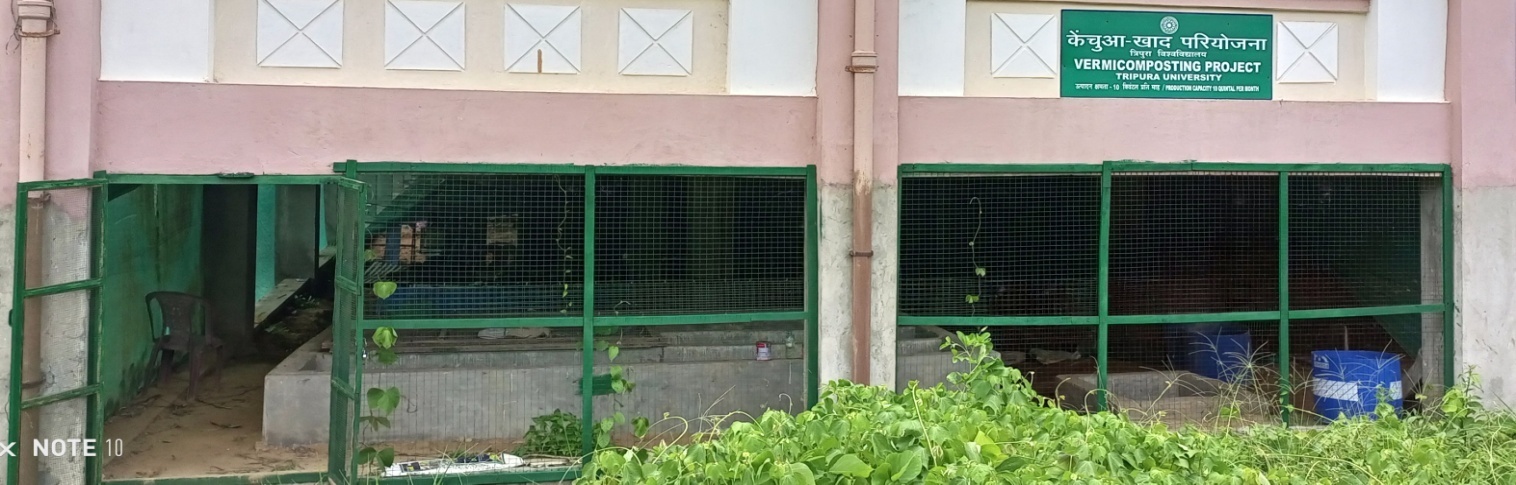
Vermicomposting is a biological process that converts biodegradable organic waste into nutrient-rich organic manure with the help of earthworms. The primary objective of vermicomposting is to produce high-quality organic manure from agricultural residues, garden waste, animal farm waste, and other biodegradable materials that are often discarded indiscriminately, creating environmental and sanitation problems.
The Vermicomposting Unit at Tripura University was established using locally available species of composting earthworms, including Perionyx excavatus, Eisenia fetida, and Eudrilus eugeniae. The unit consists of six (06) cemented vermicomposting tanks constructed in the basement of the car parking area of the Tripura University campus. The present production capacity of the unit is approximately 10 quintals of vermicompost per month.
A considerable quantity of kitchen waste is generated from the student and research scholar hostels, as well as residential quarters on the campus. In addition, the campus generates substantial quantities of fallen banana stems, dead plant materials, leaf litter, weeds, and other biodegradable wastes. These organic wastes are efficiently processed through the Vermicomposting Unit and converted into nutrient-rich organic manure within a relatively short period.
The primary objective of the unit is to promote the sustainable management and recycling of biodegradable waste generated within the University campus. The unit has the capacity to accommodate approximately 20 quintals of biodegradable waste at a given time, calculated on a fresh-weight basis. Through this initiative, Tripura University is contributing to waste reduction, resource recovery, soil fertility enhancement, and environmentally sustainable campus management.
STEPS OF VERMICOMPOSTING:
| Step 1 : | Processing includes waste collection, shredding, mechanically separating the metal, glass, and ceramics, as well as storing organic wastes. |
| Step 2 : | Pre-digesting organic waste for 20-25 days by piling it up with slurry made from cow dung. The material is partially digested during this process and is suitable for earthworm eating. After drying, slurry and cattle manure can both be used. Vermicomposting shouldn't be done with wet dung. |
| Step 3 : | Setting up an earthworm bed to place the trash for the preparation of vermicompost, a concrete basis is needed. In addition to allowing worms to enter the soil, loose soil also allows water and all other soluble nutrients to enter the soil at the same time. |
| Step 4 : | After collecting vermicompost, earthworms are collected. To separate totally composted material, the composted material was sieved. A vermicompost bed will once more receive the partially decomposed material. |
| Step 5 : | Vermicompost should be stored in a suitable location to preserve moisture and promote the growth of beneficial microorganisms. |
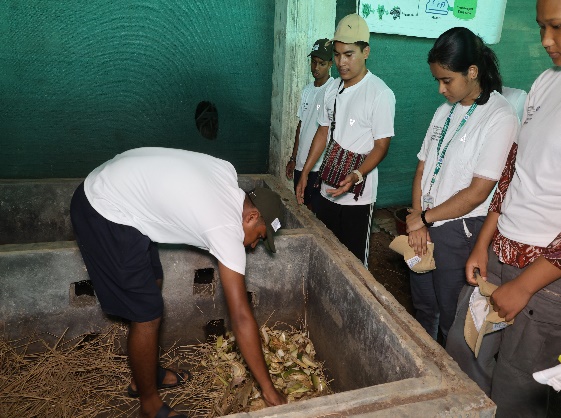
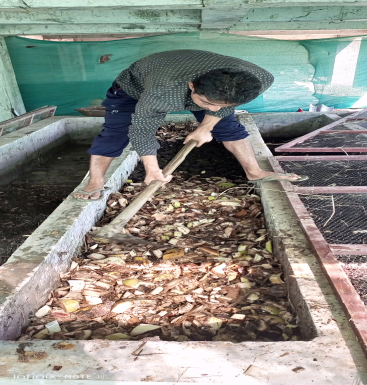
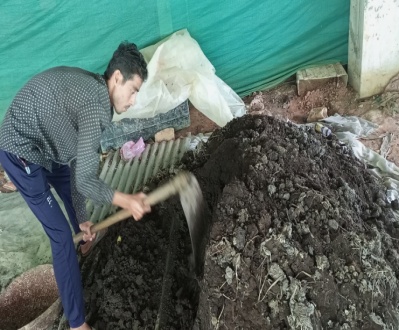
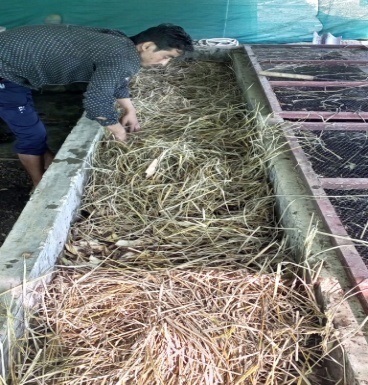
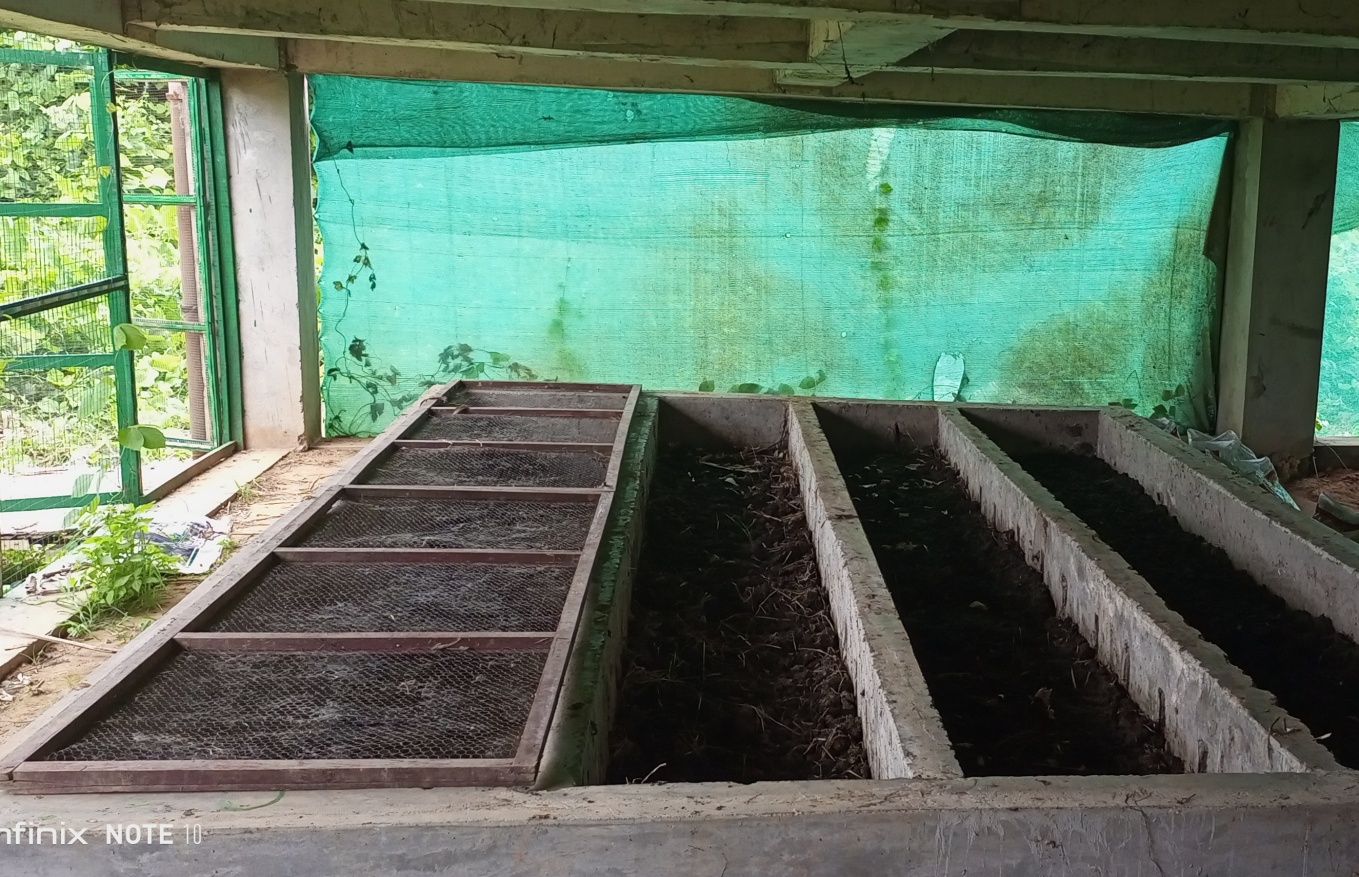
Addition of Kitchen waste, Banana stem, Cowdung and Straw to the Unit
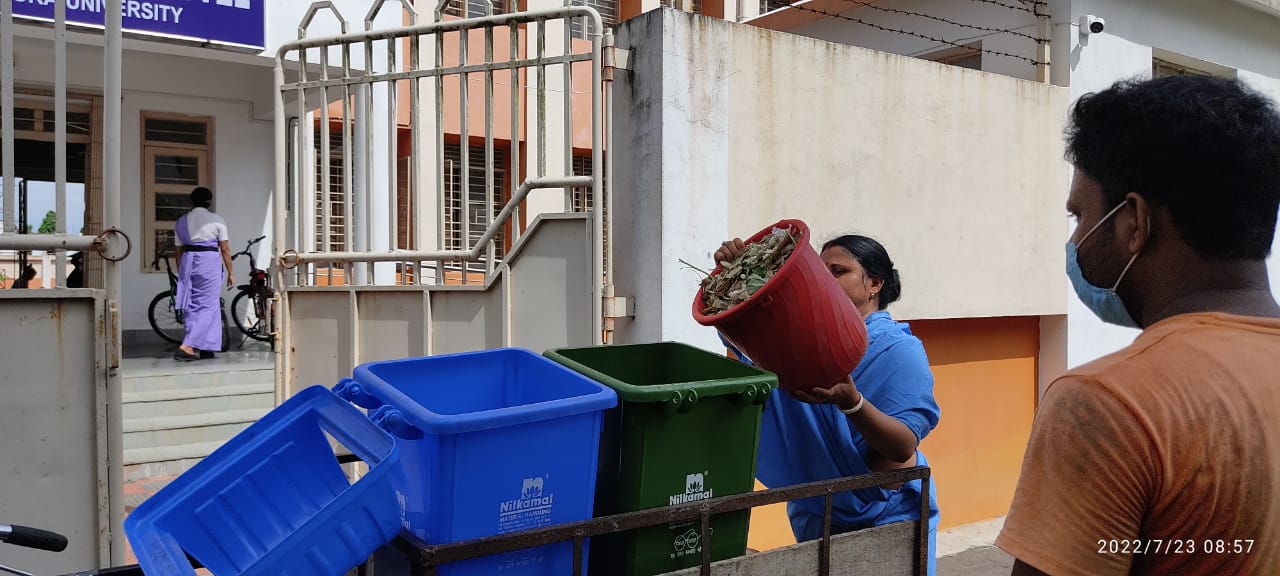
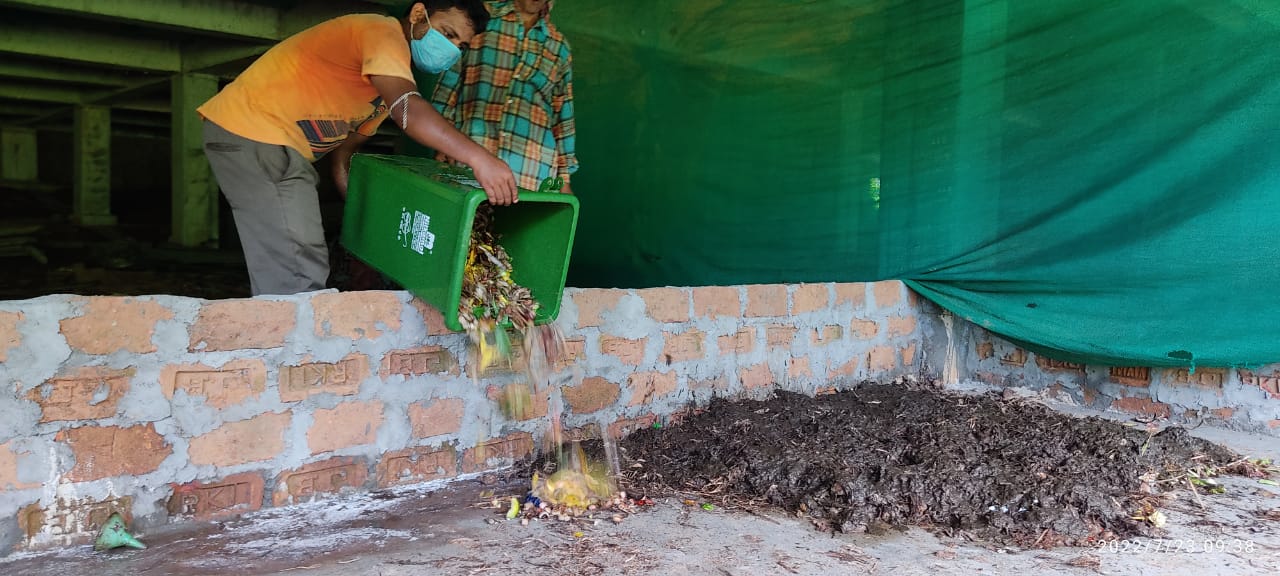
Collection of Waste from hostels for vermicomposting
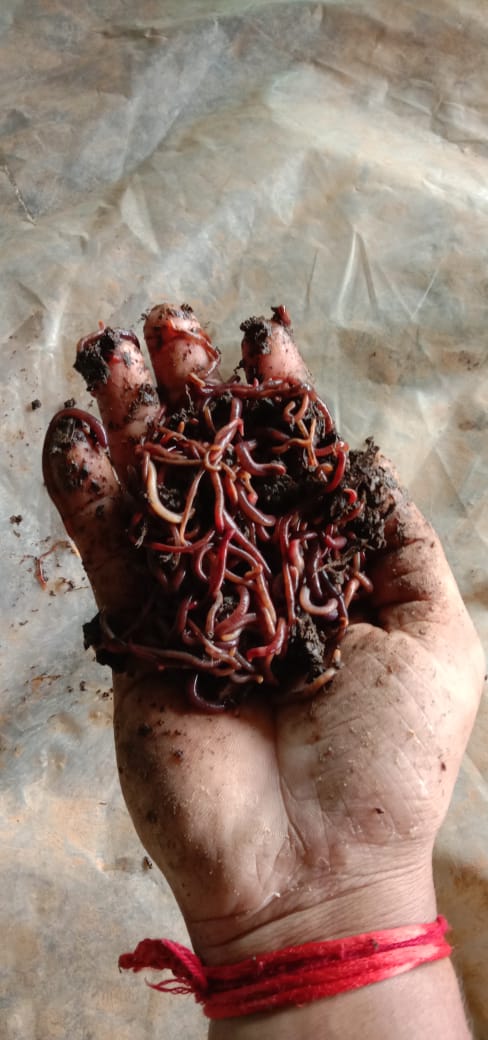
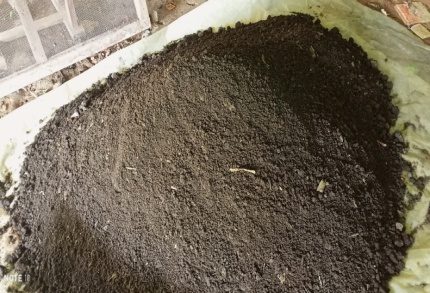
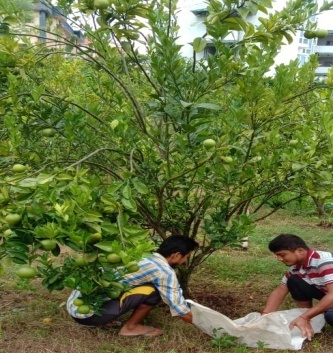
Releasing earthworm into the tank, Vermicompost and its application in the garden
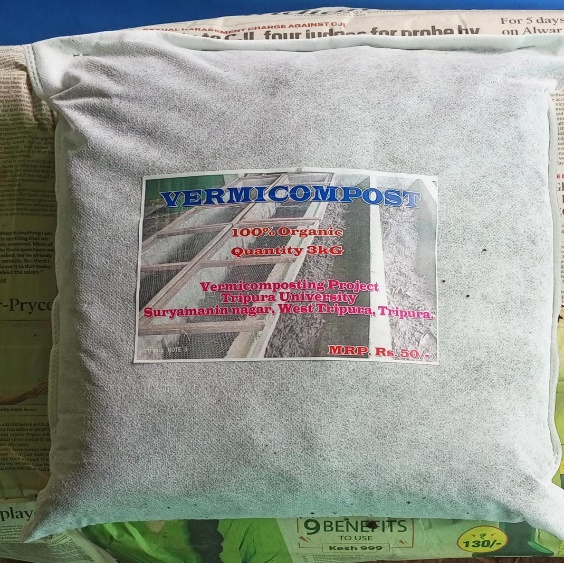
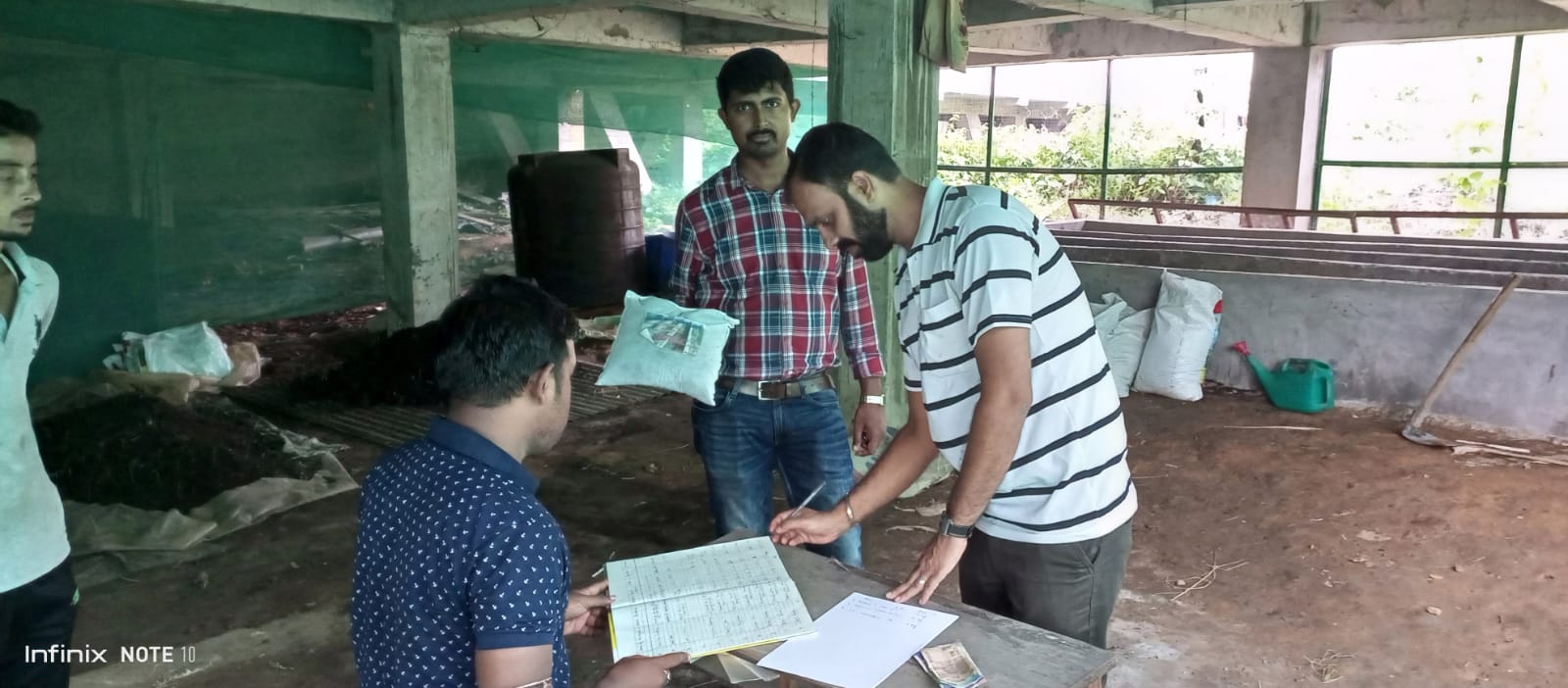
Packaging of Vermicompost for sale
HARVESTING AND PACKAGING OF VERMICOMPOST:
- The prepared vermicompost is collected and stored in sacks for further processing.
- The vermicompost is then packed into biodegradable cloth vermi-bags.
- The vermicompost bags are weighed and packed in two sizes: 3 kg and 5 kg. The bags are then properly sealed.
- Each sealed bag is labelled with a sticker indicating the weight and other relevant details.
- The price of the vermicompost is also mentioned on the sticker according to the weight of the bag.
The Vermicomposting Unit is functioning successfully and meets the requirement for organic manure for gardening and landscaping activities at Tripura University at an affordable cost. The vermicompost produced by the unit is used in the University's flower gardens and orchards to support sustainable plant growth.
The vermicompost is also packaged and sold within the campus to the University community at ₹80 per 5 kg bag and ₹50 per 3 kg bag. A separate bank account is maintained for the Vermicomposting Project. The revenue generated from the sale of vermicompost is utilized to meet the recurring expenses of the project, thereby helping to make the unit financially self-sustaining.
The initiative promotes vermicomposting and sustainable waste management using locally available resources. Several students, scholars and villagers have been trained in vermicomposting techniques. The project contributes significantly to biodegradable waste management and the production of quality organic manure on campus.
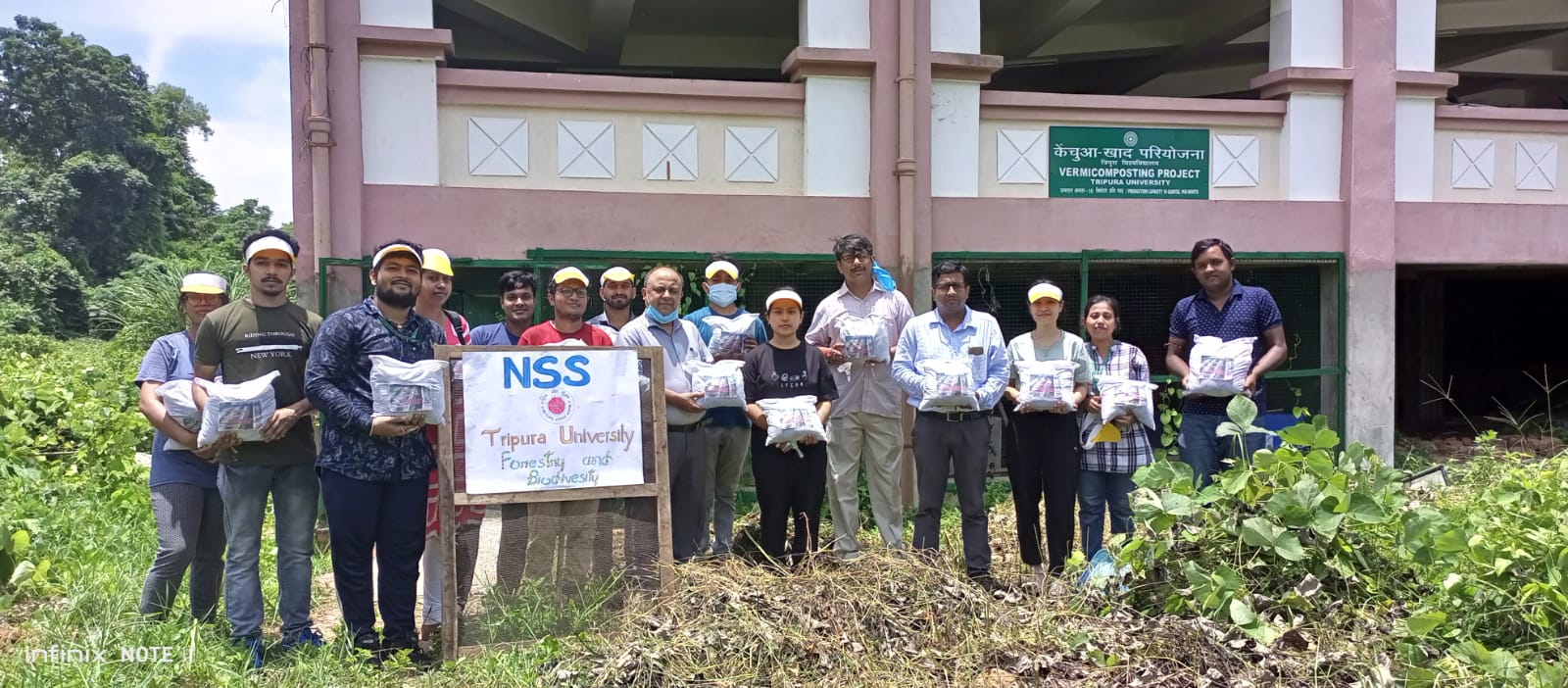
Vermicompost preparation by the NSS Unit, Tripura university
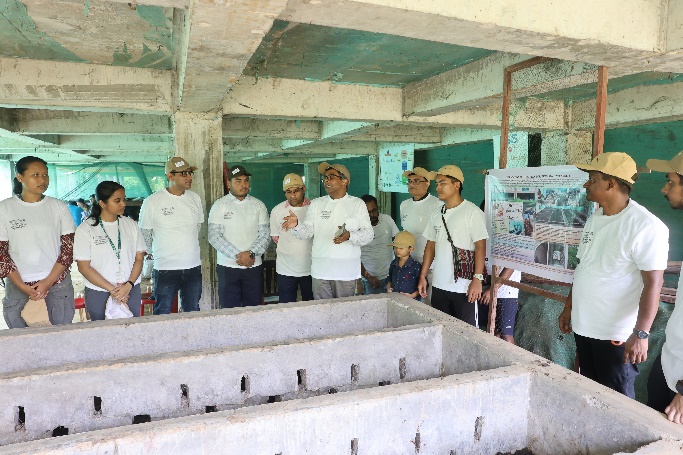
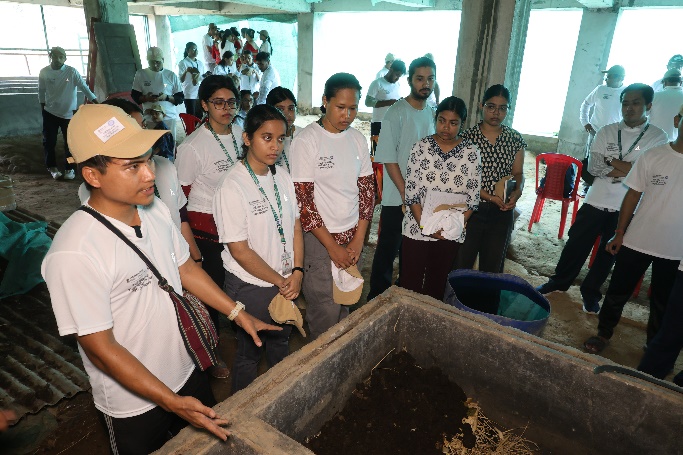
Vermicomposting training for Vasudha Club members on Earth Day
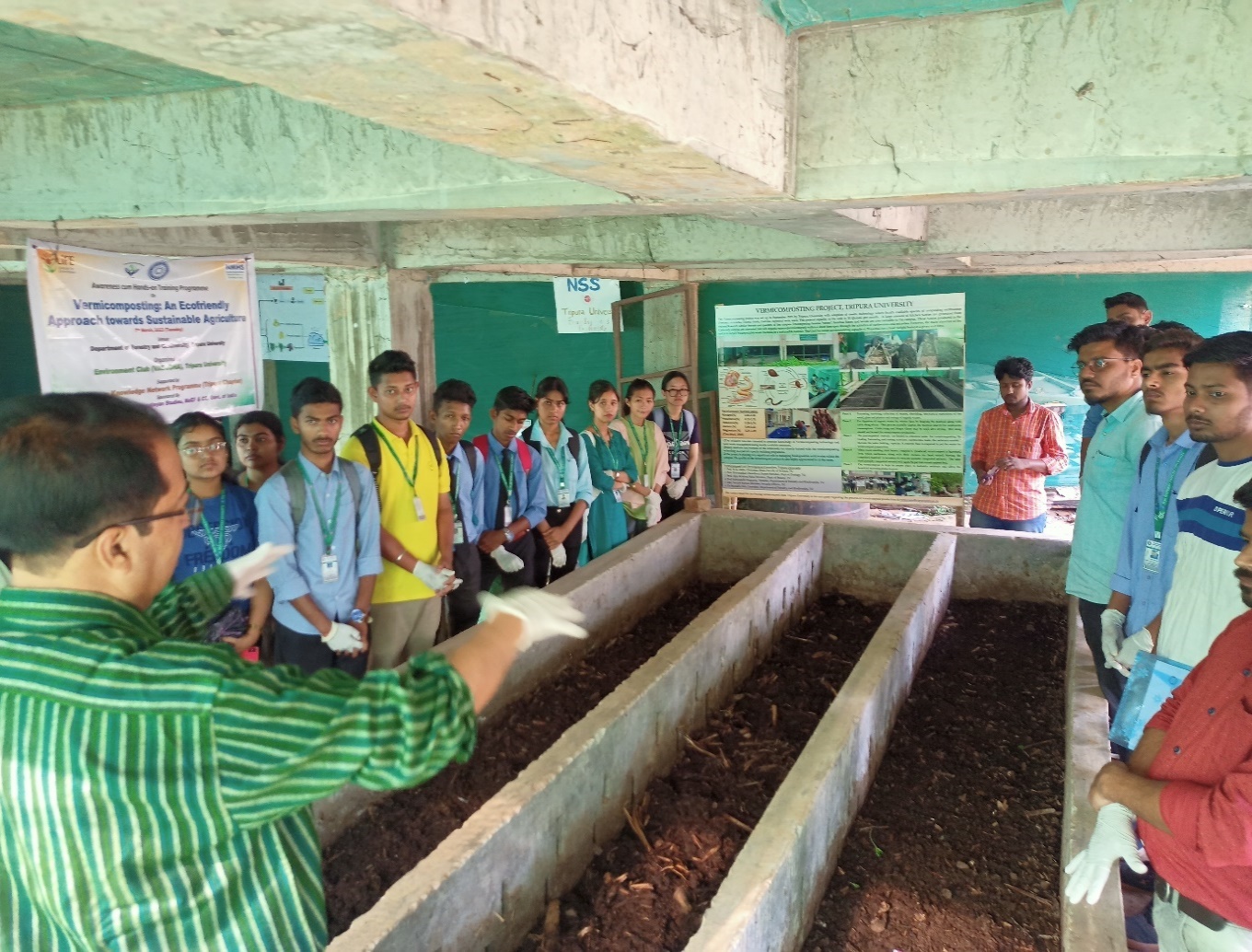
Vermicompost training session with Prof Priyashankar Choudhury, Earthworm Expert
Salient Achievements of the Vermicomposting Project
- Conducted several workshops and training programmes on vermicomposting and sustainable waste management.
- Generated approximately ₹90,000 in revenue through the sale of vermicompost.
- Recognized as one of the best practices of Tripura University campus for sustainable waste management.
- Integrated vermicomposting activities with NSS programmes, promoting student participation and environmental awareness.
- Provided affordable and quality organic manure to the University fraternity for gardening and agricultural activities.
- Contributed to the sustainable management of biodegradable waste generated on the campus.
- Promoted soil health and sustainability through the use of nutrient-rich vermicompost and reduction in chemical fertilizer use.
- Encouraged the recycling and reuse of locally available organic resources, supporting a cleaner and greener campus.
Monitoring team of the Vermicomposting Unit:
- Dr Sourabh Deb, Assistant Professor, Department of Forestry and Biodiversity, Tripura University (Contact no-9436094064)
- Mr Abraham Ranglong, Ph.D. Scholar, Department of Forestry and Biodiversity, Tripura University (Contact no-9366949210)
- Mr Karpan Baul, Part-time Worker (Contact no-8416085174)
For purchasing vermicompost from Tripura University or for any queries regarding the vermicompost production process, please contact us at This email address is being protected from spambots. You need JavaScript enabled to view it.
Vermicomposting Project, Tripura University